



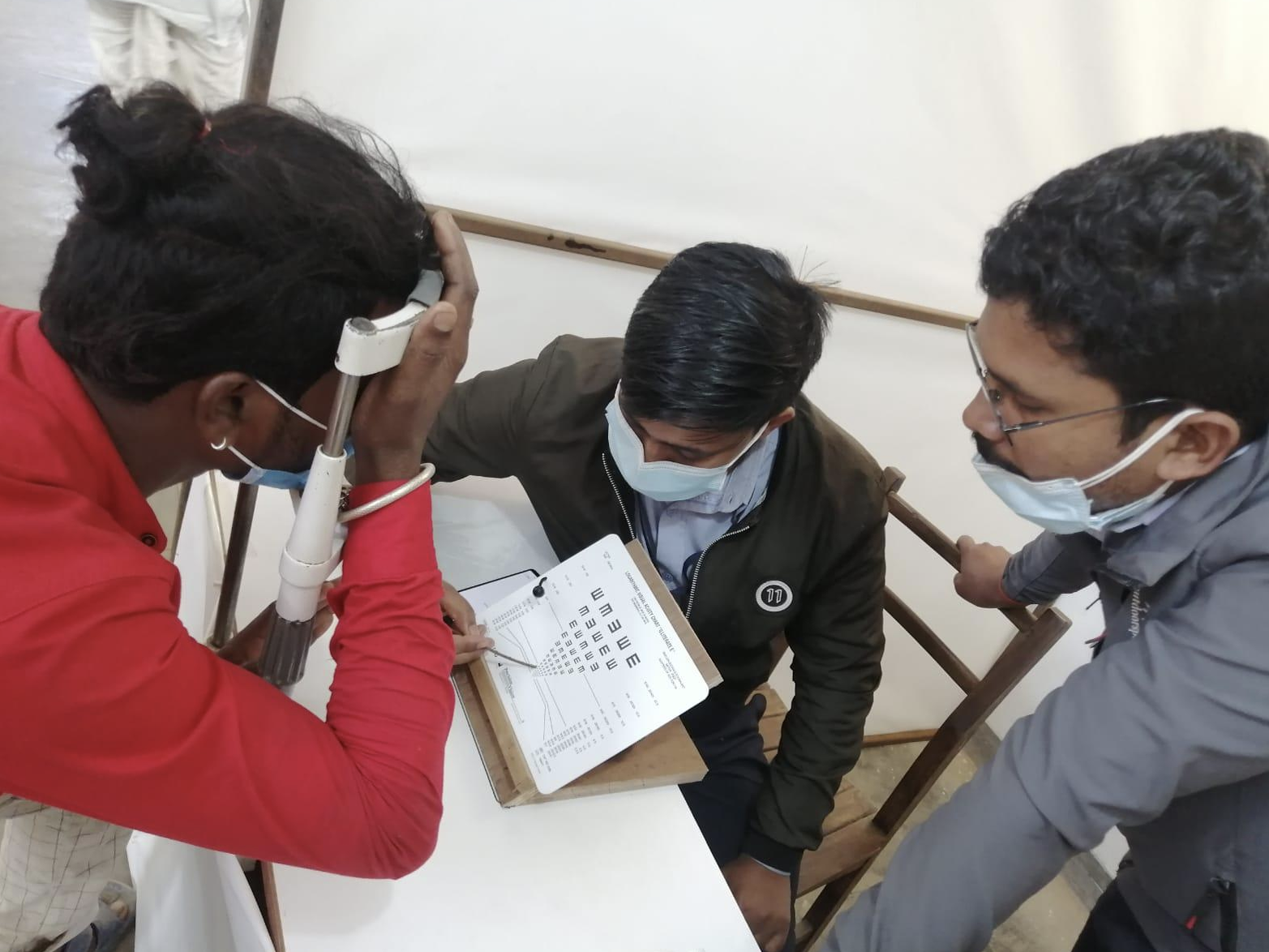
u003ch2u003eBackgroundu003c/h2u003ernu003cspan style=u0022font-weight: 400;u0022u003eAlmost a decade ago, Peek developed and u003ca href=u0022https://peekvision.org/resources/research/validating-our-vision-test/u0022u003evalidated Peek Acuityu003c/au003e, a smartphone-based distance visual acuity test. However, around 500 million people are estimated to have untreated near-vision impairments. To identify all of those in need of treatment, it is vital that accurate and accessible tests for near vision are available. Peek has developed a smartphone-based near vision test, which was validated against conventional vision testing in a clinical setting in Nepal and then in a real-world setting in India.u003c/spanu003ernu003ch2u003eWhat did the research show?u003c/h2u003ernu003culu003ern tu003cliu003eu003cbu003eReliable smartphone screeningu003c/bu003eu003cspan style=u0022font-weight: 400;u0022u003e: the studies found high levels of agreement with a reference near vision test as well as high levels of repeatability among independent examiners. This means that the near vision test developed by Peek is reliable and can be used for effective vision screening.u003c/spanu003eu003c/liu003ern tu003cliu003eu003cbu003eAccurate testing for onward referralu003c/bu003eu003cspan style=u0022font-weight: 400;u0022u003e: Peek’s near vision test gave comparable results to conventional testing, meaning that it can be used to make accurate decisions about whether a participant needs to be referred onwards for further testing.u003c/spanu003eu003c/liu003ern tu003cliu003eu003cbu003eSimple technologyu003c/bu003eu003cspan style=u0022font-weight: 400;u0022u003e: There was no difference between the time taken to test using Peek’s smartphone-based near vision test and conventional tests.u003c/spanu003eu003c/liu003ernu003c/ulu003ernu003ch2u003ePublicationu003c/h2u003ernu003culu003ern tu003cliu003eu003cspan style=u0022font-weight: 400;u0022u003ePublished in u003ca href=u0022https://doi.org/10.1167/tvst.14.8.24u0022u003eTranslational Vision Science u0026amp; Technology (2025)u003c/au003e and u003c/spanu003eu003ca href=u0022https://doi.org/10.1167/tvst.11.12.18u0022u003eu003cspan style=u0022font-weight: 400;u0022u003eTranslational Vision Science u0026amp; Technology (2022)u003c/spanu003eu003c/au003eu003c/liu003ernu003c/ulu003e
The original Peek Acuity app, which tests distance vision only, has been successfully validated and embedded across numerous programmes worldwide. Combining this with digital near vision testing, particularly in populations at risk of presbyopia who can be identified in the same visit, will facilitate the identification and management of both near and distance visual impairments. It may also make vision measurement more appealing to organisers of community health surveys and surveillance who are already using digital devices for data collection. The Peek Near Vision test we have validated in this study could serve this purpose.”
Dr Marzieh Katibeh
Study lead author and Peek researcher
u003ch2u003eu003cstrongu003eCollaboratorsu003c/strongu003eu003c/h2u003ernu003culu003ern tu003cliu003eu003cspan style=u0022font-weight: 400;u0022u003ePeek Visionu003c/spanu003eu003c/liu003ern tu003cliu003eu003cspan style=u0022font-weight: 400;u0022u003eSagarmatha Choudhary Eye Hospital, Nepalu003c/spanu003eu003c/liu003ern tu003cliu003eu003cspan style=u0022font-weight: 400;u0022u003eInternational Centre for Eye Health at the London School of Hygiene and Tropical Medicine, UKu003c/spanu003eu003c/liu003ern tu003cliu003eu003cspan style=u0022font-weight: 400;u0022u003eNepal Netra Jyoti Sangh, Nepalu003c/spanu003eu003c/liu003ernu003c/ulu003ernu003ch2u003eu003cstrongu003eFundingu003c/strongu003eu003c/h2u003ernu003cspan style=u0022font-weight: 400;u0022u003eThe National Institute for Health Research (NIHR) (using the UK’s Official Development Assistance (ODA) Funding) and the Wellcome Trust under the NIHR-Wellcome Partnership for Global Health Research.u003c/spanu003ernu003ch2u003eu003cstrongu003eWhat’s next?u003c/strongu003eu003c/h2u003ernThe near vision test has been evaluated in a real-world setting in India with positive results, currently being prepared for academic publication. It is being integrated across Peek’s product suite and is expected to be available in Peek-powered programmes and surveys by 2025.
Share


