



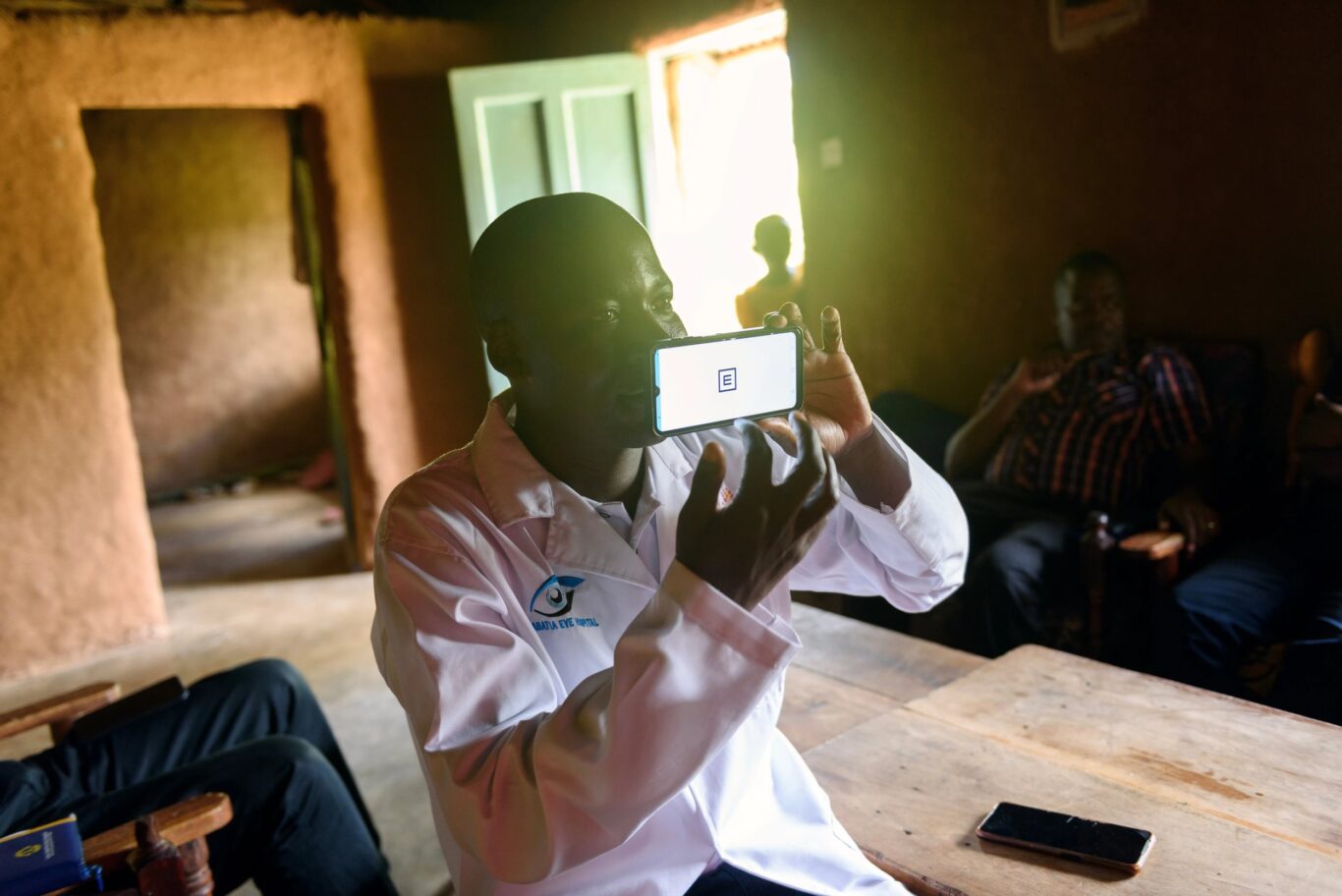
Cataract remains the leading cause of blindness and the second leading cause of vision impairment globally. Although cataract surgery is one of the most cost-effective interventions in global health, millions of people, particularly in low-resource settings, face significant barriers to accessing care.
A multidisciplinary research group including Peek Vision’s Professor Andrew Bastawrous and Dr Hillary Rono developed a dynamic simulation model to project Kenya’s cataract backlog, surgical capacity and mortality trends between 1990 and 2040. The model draws on multiple data sources and unlike previous estimates, tracks how people move through the system over time in terms of developing cataract, awaiting surgery, receiving treatment, or dying while still visually impaired.
While Kenya has one of the stronger cataract service delivery systems in sub-Saharan Africa, the findings suggest that even relatively well-performing systems are not keeping pace with demographic change and incident need.
Commenting on the findings, Professor Andrew Bastawrous, CEO of Peek Vision said:
Cataract surgery is one of the most effective and affordable interventions in global health. Yet delay turns a solvable problem into a life-limiting one. Surgical backlogs are not abstract statistics. They represent friendships lost, independence taken, and years lived in avoidable darkness. The question is not whether cataract blindness is solvable. It is whether we are willing to act at the pace the evidence demands.”
This study provides an evidence basis that can be adapted by other countries to model future demand and guide long-term planning, while underscoring the urgent need to increase surgical capacity, improve equitable access to care and invest in sustainable, high-volume service delivery models capable of meeting growing needs.
It closely aligns with another research article coordinated by the International Centre for Eye Health (ICEH) and the World Health Organisation, published at the same time in The Lancet Global Health. That research found that WHO targets to address the global cataract surgery backlog will be missed at the current rate of progress.
Collectively the results are a call for further action over untreated cataract, which accounts for 45% of all blindness worldwide.
Share


Major new research programme could fast-track health service improvement in low and middle-income countries
Read more
Kenya’s Vision Impact Project reaches one million people in its first year
Read more
Our evidence base
Peek tools are developed using rigorous scientific and public health methods, and are backed by numerous peer-reviewed research studies.
Read more